
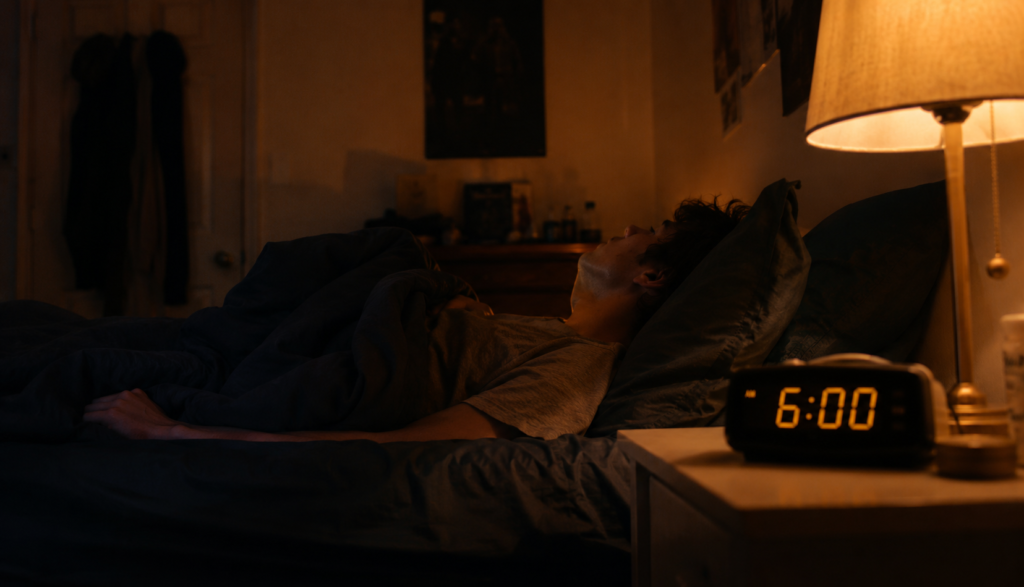
Six hours used to feel like a badge of honor to me. I’d wake up before everyone else, get things done, and tell myself I was just built differently — one of those people who didn’t need much sleep. I was wrong, and it took me longer than I’d like to admit to figure that out. The question of whether 6 hours of sleep is enough isn’t just about how tired you feel the next morning. It’s about what’s quietly happening inside your body while you’re convinced you’re fine.
Sleep deprivation is one of the most misunderstood health issues because its damage accumulates slowly. You don’t collapse after one short night. You just get a little slower, a little more reactive, a little less sharp — and because it happens gradually, most people never connect the dots. The research on sleep duration is clear, even if the cultural message around it isn’t.
What I’ve learned from years of tracking my own sleep schedule and studying the science is this: whether 6 hours of sleep per night is enough depends on your biology, your sleep quality, and how honest you’re willing to be about how you actually feel. Let’s get into it properly.
What the Research Actually Says About Sleep Duration
The recommended sleep for healthy adults sits between 7 and 9 hours per night, according to sleep research institutions worldwide. That’s not a loose estimate — it’s built on decades of studies measuring cognitive function, metabolic health, immune system performance, and mortality rates across different sleep durations. Six hours of sleep consistently falls below how many hours of sleep you actually need in nearly every meaningful metric.
What’s particularly striking is how badly people misjudge their own impairment. One study that’s stuck with me had participants restricted to 6 hours of sleep per night for two weeks. Their reaction time and decision-making declined to levels equivalent to being legally drunk — but when asked, they reported feeling only slightly tired. The sleep deficit had eroded their ability to perceive their own decline. That’s the trap most people are caught in.
Sleep loss compounds through sleep debt. Each night you fall short of your sleep requirement, that deficit doesn’t fully disappear. It carries forward, stacking on top of previous nights, quietly degrading your performance day after day. Most people running on 6 hours of sleep think they’ve adapted when they’ve actually just stopped noticing how impaired they are.
I’ve seen this go wrong when people use a single good day as evidence that they’re fine on minimal sleep. One day where you feel sharp doesn’t cancel out weeks of accumulated sleep loss — it just means cortisol levels spiked and temporarily masked the fatigue. The underlying deficit is still there.
How Sleep Cycles Change Everything About Those 6 Hours
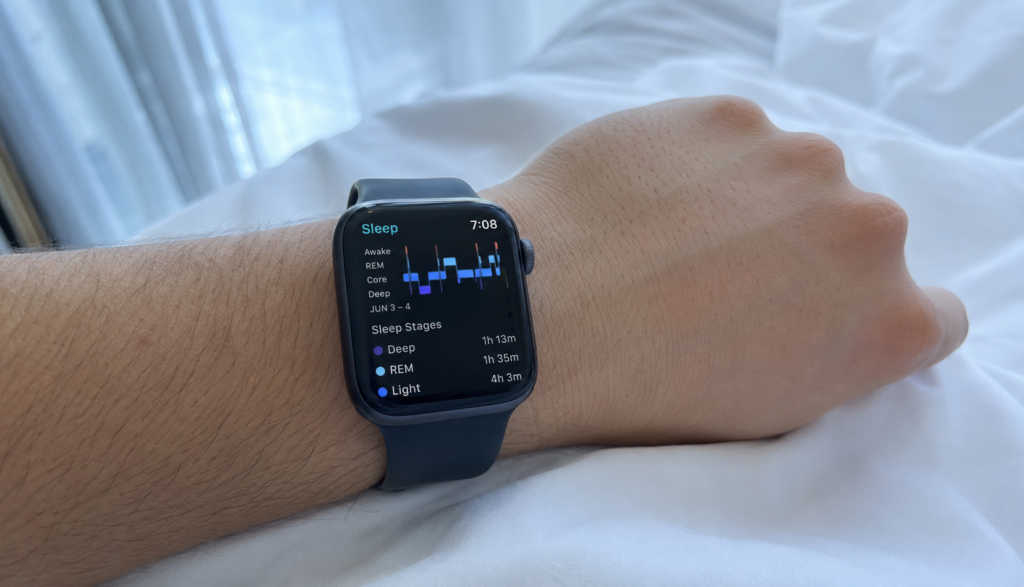
Not all sleep is equal, and understanding sleep architecture is key to understanding why hours alone don’t tell the full story. A full night’s sleep moves through multiple sleep stages — light sleep, deep sleep, and REM sleep — cycling roughly every 90 minutes. In a 7 to 8 hour night, you typically complete 4 to 5 full sleep cycles. At 6 hours, you’re cutting that short in ways that matter enormously.
REM sleep, which is heavily concentrated in the final hours of the night, is where memory consolidation, emotional processing, and BDNF production happen. When you shorten your night’s sleep to 6 hours, you’re disproportionately cutting into that late-stage REM sleep. The first few cycles protect deep sleep, so the sleep you lose first is the most cognitively valuable kind.
Running your exact numbers through our Sleep Calculator takes the guesswork out entirely — you can see precisely which sleep stages you’re likely shortchanging based on your bedtime and wake time.
What surprised me was how differently my days felt when I started actually tracking sleep quality rather than just total duration. Two nights of 6 hours with heavy deep sleep fragmentation felt far worse than one night of 6 hours where I hit my cycles cleanly. The quantity matters, but the architecture inside those hours matters just as much.
The Short Sleeper Myth and Why It Doesn’t Apply to You
Every time the topic of sleep needs comes up, someone mentions they’re a short sleeper — one of those rare people who genuinely thrives on minimal sleep. This is a real genetic variation, but it affects somewhere between 1% and 3% of the population. The odds that you’re one of them are extremely low, and yet the number of people who casually claim this status is enormous.
True genetic short sleepers carry a specific mutation that alters their homeostatic sleep drive and sleep pressure regulation. They wake after 5 to 6 hours feeling genuinely restored, without the cognitive impairment or mood disruption that chronic sleep deprivation causes in everyone else. This isn’t a lifestyle choice — it’s hard-coded biology that shows up in their physiology, not just their behavior.
Most people who believe they function on 6 hours have simply adapted to feeling tired. Their baseline has shifted so gradually that they’ve forgotten what genuine rest feels like. If you’re dealing with chronic sleep issues, a doctor or sleep specialist is always worth consulting — especially if you’ve been running short for months or years and can’t remember the last time you woke up truly rested.
The first time I seriously tested whether I was one of these short sleepers, I slept without an alarm for a full week. Every single morning I slept between 7.5 and 8.5 hours. My body was clear about what it actually needed when I let it speak.
What Chronic Sleep Deprivation Does to Your Body

The physical consequences of running on insufficient daily sleep go well beyond feeling tired all the time. These are the same sleep deprivation effects that show up across cardiovascular health — people regularly sleeping under 6 hours have significantly higher rates of hypertension, heart disease, and stroke. The glymphatic system, which clears metabolic waste from the brain during deep sleep, can’t complete its work in a shortened night, leaving inflammatory byproducts that accumulate over time.
Hormone regulation takes a serious hit with sustained sleep loss. Growth hormone secretion peaks during deep sleep, and cortisol — your primary stress hormone — stays elevated when you don’t sleep enough, which disrupts everything from metabolic health to immune system function. Adenosine buildup, the chemical that drives sleep pressure throughout the day, doesn’t fully clear either, meaning you start each new day with a neurochemical handicap.
Most people overlook this completely: sleep deprivation disrupts the hormones that regulate hunger and satiety. Ghrelin goes up, leptin goes down, and your appetite for high-calorie food increases measurably. Sleep loss and weight gain are more directly connected than most people realize, and it operates through biology, not willpower.
Microsleeps — involuntary moments where your brain drops into sleep for a second or two without your awareness — become far more common when you’re running a sleep deficit. If you’ve ever blinked and lost a moment while driving or in a meeting, that was likely a microsleep. They’re a direct warning sign from your brain that it’s not getting the adult sleep it needs.
What Most People Don’t Know About Sleep and Mental Performance
Here’s something that rarely gets discussed in the mainstream conversation about sleep needs: the cognitive damage from chronic sleep deprivation doesn’t reverse as quickly as most people assume. Research shows that after two weeks of restricted sleep, even a full recovery weekend doesn’t fully restore baseline cognitive function. The sleep debt you’ve built up over months of 6-hour nights can take weeks of consistently adequate sleep to meaningfully repair.
Sleep inertia — that groggy, disoriented feeling when you wake up — is significantly worse after insufficient sleep because you’re more likely to be pulled out of deep sleep before a natural cycle completes. Most people experience this as the alarm “interrupting” their sleep, but it’s actually a signal that the body needed more time. Chronically, this contributes to a persistent low-grade cognitive fog that people normalize as just how mornings feel.
From experience, the smarter move is to treat mental sharpness, mood stability, and decision-making quality as direct outputs of your sleep duration and quality, not just your diet or exercise. When my thinking felt slower than usual, I stopped blaming my workload and started checking my sleep data first. Nine times out of ten, a string of short nights was the real cause.
The brain’s ability to form and retrieve memories, regulate mood through proper hormone balance, and sustain attention are all fundamentally dependent on completing the full range of sleep stages consistently. Shortchanging those stages with a 6-hour cap isn’t a neutral trade-off — it’s a measurable reduction in how well your brain functions.
Signs That 6 Hours Isn’t Working for You
There are clear patterns that show up when sleep duration is genuinely inadequate, and they’re worth taking seriously rather than rationalizing. Waking up tired consistently — not just on Monday mornings, but most days — is the most obvious signal. If you’re not feeling rested after a night’s sleep, the answer is almost always more sleep or better sleep quality, not stronger coffee.
Relying on an alarm to wake up is another marker. Most people whose sleep needs are actually being met will naturally begin waking close to their alarm time, or slightly before. If you’re sleeping through multiple alarms or feeling physically pulled out of sleep when it goes off, your body hasn’t completed its natural sleep cycle for the night.
I’ve tracked this myself across periods of different sleep schedules, and the difference in reaction time alone was measurable within a few days of shifting from 6 hours to 7.5. Tasks that required sustained focus took noticeably less effort. Social patience improved. Small frustrations stopped escalating the way they did when I was running short on sleep per night.
Mood swings, increased anxiety, difficulty with decision-making, and a persistent low-level irritability are all behavioral signs of sleep deprivation that most people attribute to stress or personality rather than insufficient sleep. Getting enough sleep consistently often quietly fixes problems people have been managing with other strategies for years.
FAQ: Is 6 Hours of Sleep Enough?

Most people can get through the day on 6 hours, but functioning and thriving are different things. Cognitive function, reaction time, and mood regulation are all measurably worse with less than 7 hours of sleep per night, even when people report feeling okay.
For the vast majority of adults, no. The recommended sleep for adults is 7 to 9 hours. Six hours consistently falls short of what most people need to maintain physical health, mental performance, and emotional stability.
Chronic 6-hour sleep leads to accumulated sleep debt, increased risk of cardiovascular health issues, impaired immune system function, and declining cognitive performance. One or two short nights aren’t catastrophic, but making 6 hours your daily sleep baseline carries real long-term consequences.
True genetic short sleepers exist but represent roughly 1-3% of the population. Most people who believe they thrive on 6 hours have simply adapted to a lower baseline and no longer recognize how impaired they actually are
The most reliable test is sleeping without an alarm for a full week. If you naturally wake after 6 hours feeling genuinely rested — with no grogginess, stable mood, and sharp focus — you may have a lower sleep requirement. Most people will sleep significantly longer when they remove external wake-up pressure.
Both matter. High sleep quality with proper deep sleep and REM sleep completion can make 7 hours feel better than 8 fragmented hours. But you can’t fully compensate for insufficient sleep duration with quality alone — the body still needs time to complete all sleep stages.
The glymphatic system can’t fully clear metabolic waste, BDNF production is reduced, memory consolidation is incomplete, and adenosine buildup isn’t properly resolved. Over time, this contributes to accelerated cognitive aging and increased vulnerability to neurodegenerative conditions according to emerging sleep research.
The Bottom Line
Six hours of sleep isn’t enough for most people — and the most dangerous part of that fact is how easy it is to not realize it. The adaptation to sleep deprivation is so gradual that most people genuinely believe they’re fine when they’re running at a significant deficit. The evidence from both research and real sleep tracking points in the same direction: 7 to 9 hours is where the body and brain actually perform. Start there, track honestly, and let how you feel over a full month — not just a single morning — tell you what you actually need.