
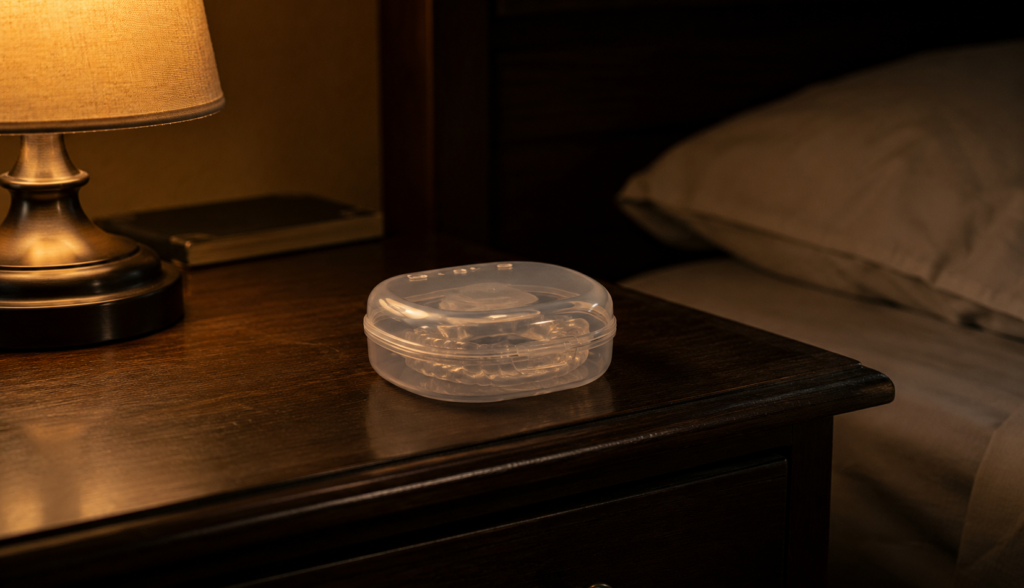
CPAP is the most effective single treatment for obstructive sleep apnea, and it’s also one of the most abandoned medical devices in existence — studies consistently show that somewhere between 30 and 50 percent of people prescribed CPAP stop using it within the first year, often resurfacing later as unresolved insomnia from fragmented, untreated sleep.
The mask is uncomfortable, the noise disrupts a partner’s sleep, traveling with it is a hassle, and for many people the adjustment period simply never resolves into something sustainable. This doesn’t mean sleep apnea has to go untreated. It means the alternatives need to be understood properly — what they actually do, who they genuinely help, and where their limits are.
The mistake most people make when looking for sleep apnea treatment without CPAP is assuming there’s a single equivalent replacement. There isn’t. The alternatives work through different mechanisms, target different severities and causes of airway obstruction, and in many cases work best in combination rather than as a single standalone fix. Understanding which category your sleep apnea falls into — positional, weight-related, anatomical, or a combination — determines which alternative has a realistic chance of working for you specifically.
I’ve spent considerable time researching the comparative evidence on CPAP alternatives, separating what has genuine clinical support from what’s marketed with weak evidence to people desperate to avoid the mask. The gap between those two categories is significant, and it’s worth knowing before investing time and money in an approach that was never going to work for your specific situation.
Understanding What CPAP Actually Fixes Before Looking at Alternatives
Obstructive sleep apnea occurs when the soft tissue at the back of the throat — including the soft palate, tongue base, and surrounding muscles — relaxes during sleep to the point of partially or fully collapsing the airway. CPAP works through positive air pressure that physically holds the airway open by pneumatic force, preventing the collapse entirely regardless of why it was happening. This is why CPAP is effective across nearly all sleep apnea severities and causes — it doesn’t need to understand or address the underlying mechanism because it bypasses the problem directly with continuous air pressure.
Every alternative to CPAP, by contrast, has to address the actual mechanism causing the airway collapse — meaning the alternative that works for you depends entirely on what’s causing your specific obstruction. Positional apnea, where the airway only collapses when lying on the back due to gravity pulling the tongue backward, responds well to interventions that simply prevent back sleeping. Apnea driven by excess soft tissue around the airway from elevated body weight responds best to weight loss. Apnea caused by jaw or tongue positioning responds to oral appliances that physically reposition those structures. None of these alternatives works universally the way CPAP’s pneumatic approach does, which is exactly why proper diagnosis of the underlying cause matters more for alternatives than it does for CPAP itself.
The apnea hypopnea index — the measure of how many breathing disruptions occur per hour of sleep — also matters significantly when considering alternatives. Mild sleep apnea, generally classified as an AHI between 5 and 15 events per hour, responds far more reliably to non-CPAP interventions than severe sleep apnea with an AHI above 30. Most of the alternatives discussed here have meaningfully weaker evidence as severity increases, and a sleep specialist’s assessment of your specific severity should directly inform realistic expectations about what an alternative approach can achieve.
Oral Appliance Therapy: The Strongest Evidence-Based Alternative
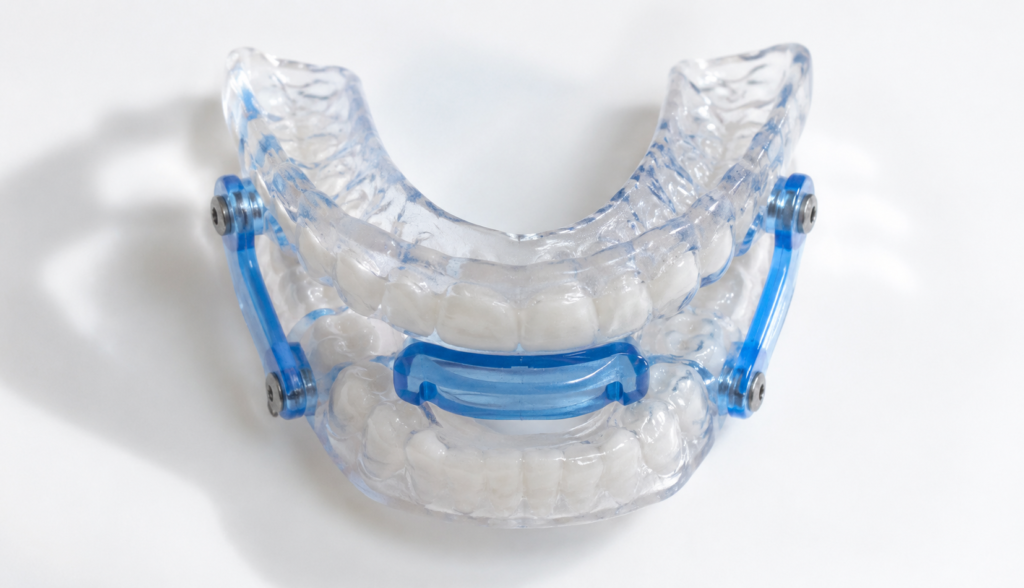
Mandibular advancement devices are the CPAP alternative with the strongest clinical evidence behind them, and they work through a clear mechanical principle. The device fits over the upper and lower teeth and gently holds the lower jaw in a forward position throughout the night. This forward positioning pulls the tongue base forward as well, since the tongue is anchored to the jaw, which increases the space at the back of the throat and reduces the likelihood of airway collapse. For people whose apnea is significantly influenced by tongue and jaw positioning — which is a substantial portion of mild to moderate cases — this mechanism directly addresses the root obstruction rather than just compensating for it.
Clinical trials comparing oral appliance therapy to CPAP consistently find that while CPAP produces a larger reduction in AHI on average, oral appliances produce comparable improvements in daytime fatigue, blood pressure, and quality of life — largely because compliance rates are dramatically higher. A device that reduces AHI by 60 percent and gets worn every night outperforms a CPAP machine that would reduce AHI by 90 percent but sits in a closet after three months. This is the central argument for oral appliance therapy: real-world effectiveness depends on actual nightly use, and oral appliances are used far more consistently than CPAP across the population.
Custom-fitted devices made by a dentist who specializes in sleep medicine significantly outperform over-the-counter boil-and-bite versions, both in comfort and in the precision of jaw positioning required for the device to actually work. The process typically involves a sleep study to confirm the diagnosis and severity, a dental consultation to assess jaw structure and suitability, and a follow-up sleep study with the device in place to confirm it’s actually reducing apnea events rather than just feeling like it should. Skipping that follow-up study is one of the most common mistakes people make — without it, you genuinely don’t know whether the device is working or just changing how the night feels without changing the underlying physiology.
Positional Therapy for Position-Dependent Apnea
Positional sleep apnea — where breathing disruptions occur predominantly or exclusively when sleeping on the back — affects a meaningful subset of people with obstructive sleep apnea, particularly those with mild to moderate severity. Learning how to sleep on your back safely matters here, since gravity pulls the tongue and soft palate backward toward the throat when lying flat, narrowing the airway in a way that side sleeping largely avoids.
For people whose sleep study shows this clear positional pattern, preventing back sleeping can produce a dramatic reduction in apnea events without any other intervention.
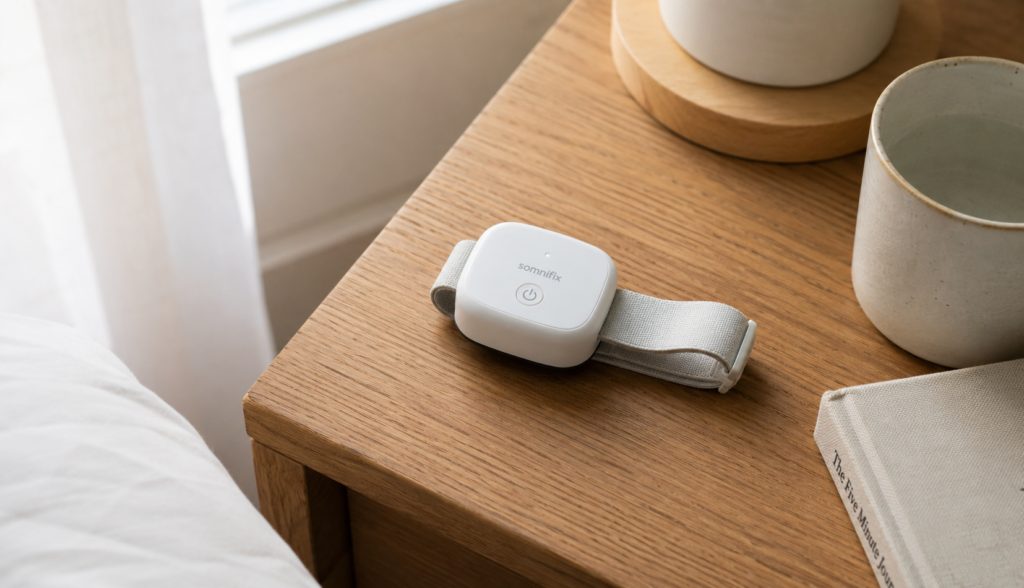
Modern positional therapy devices have moved well beyond the old tennis-ball-in-a-shirt approach. Small wearable devices, typically worn on the chest or neck, detect when the body rolls onto its back and deliver a gentle vibration that prompts a position shift without fully waking the sleeper. Clinical studies on these devices show meaningful reductions in AHI for confirmed positional apnea, with the added benefit of significantly higher long-term compliance than CPAP because the device is unobtrusive and doesn’t interfere with normal sleep movement otherwise.
The critical limitation is that positional therapy only works for genuinely positional apnea. If a sleep study shows that apnea events occur at similar rates regardless of sleep position, positional therapy alone will produce minimal benefit because the obstruction isn’t primarily gravity-driven. This is why a proper diagnostic sleep study — ideally one that tracks position alongside breathing events — is essential before investing in positional therapy. Guessing based on subjective impressions of sleeping position produces unreliable results compared to data-confirmed positional apnea.
Weight Loss and Its Direct Effect on Airway Anatomy
Excess weight, particularly around the neck and upper airway, is one of the most significant modifiable risk factors for obstructive sleep apnea, and the relationship between weight loss and apnea severity is well documented and substantial. Fat deposits around the pharynx physically narrow the airway and increase the tissue mass that can collapse during sleep when muscle tone relaxes. Research consistently shows that a 10 percent reduction in body weight is associated with roughly a 26 percent reduction in apnea hypopnea index, and more significant weight loss can produce proportionally larger improvements, with some cases of mild to moderate apnea resolving close to baseline with substantial weight loss.
This doesn’t mean sleep apnea is simply a consequence of body weight for everyone — anatomical factors like jaw structure, tonsil size, and soft palate length contribute independently of weight, and normal-weight individuals develop sleep apnea regularly. But for people whose BMI falls in the overweight or obese range and whose apnea has a clear weight-related component, weight loss represents one of the few interventions that can meaningfully reduce the underlying anatomical contributor rather than just managing symptoms around it. The challenge, of course, is that meaningful weight loss takes time, and most people need an interim treatment — an oral appliance, positional therapy, or CPAP — while pursuing the longer-term goal.
From experience working through the research on this, the most realistic framing is that weight loss should be pursued as a parallel long-term strategy alongside whichever immediate treatment addresses the apnea now, not as a standalone replacement for treatment. Sleep apnea itself makes weight loss harder — disrupted sleep increases ghrelin and reduces leptin, driving increased appetite and impaired metabolic regulation — which means treating the apnea adequately in the short term often makes the weight loss easier to achieve, creating a positive cycle rather than waiting for weight loss to fix the apnea first.
What Most People Don’t Know: Surgical and Implant Options
Surgical intervention for sleep apnea is rarely discussed as a first-line option, and for good reason — outcomes are more variable and the procedures more invasive than the alternatives covered so far. But for people with clear anatomical obstructions — significantly enlarged tonsils, a notably long soft palate, or specific jaw structure abnormalities — surgery can address a problem that no positional or oral device approach can resolve, because the obstruction is structural rather than positional or weight-related.
Uvulopalatopharyngoplasty, which removes excess tissue from the soft palate and pharynx, was historically the most common sleep apnea surgery but has fallen out of favor somewhat due to inconsistent long-term outcomes and a meaningful risk of complications affecting swallowing and voice. It remains appropriate for specific anatomical presentations but is no longer considered a default surgical option the way it once was. Tonsillectomy, by contrast, has strong and consistent evidence specifically for cases where enlarged tonsils are a clear contributing factor to airway obstruction, particularly in younger patients, and often produces substantial improvement when tonsil size is genuinely the primary issue.
Hypoglossal nerve stimulation — marketed under the brand name Inspire — represents one of the more significant recent advances in sleep apnea treatment for people who cannot tolerate CPAP and aren’t good candidates for oral appliances. A surgically implanted device monitors breathing patterns and delivers mild electrical stimulation to the hypoglossal nerve, which controls tongue movement, timing the stimulation to keep the tongue from collapsing backward during inhalation. Clinical trial data shows meaningful reductions in AHI and significant improvements in quality of life for appropriately selected patients — typically those with moderate to severe apnea who’ve failed or rejected CPAP and don’t have significant tongue base collapse contraindicating the device. It requires a surgical procedure and is generally reserved for cases where other alternatives have been tried and haven’t worked, but it represents a genuine non-CPAP pathway for a population that previously had limited options.
Lifestyle Factors That Meaningfully Reduce Apnea Severity
Alcohol consumption in the hours before bed significantly worsens sleep apnea severity by relaxing the throat muscles beyond their normal sleep relaxation level, increasing both the frequency and duration of airway collapse events. For people with mild apnea, eliminating evening alcohol can produce a measurable reduction in AHI on its own. This is one of the simplest and most overlooked interventions because it requires no device, no surgery, and no significant lifestyle overhaul — just removing a substance that’s actively working against airway stability during the exact hours it matters most.
Nasal congestion management deserves attention because a blocked nasal airway forces mouth breathing, which changes the mechanics of airway collapse and can worsen apnea severity independent of any other factor. Treating chronic nasal congestion through allergy management, saline irrigation, or addressing structural nasal issues can improve overall airway function and, in combination with other interventions, contribute to meaningful symptom reduction. It rarely resolves moderate to severe apnea alone but removes a compounding factor that makes other treatments less effective.
Myofunctional therapy — targeted exercises for the muscles of the tongue, soft palate, and throat — has accumulating evidence for improving muscle tone in the upper airway, which can reduce the likelihood of collapse during sleep. These exercises are typically prescribed as a component of broader treatment rather than a standalone cure, and they require consistent practice over months to produce measurable change. Taking our Sleep Apnea Risk Test alongside a home sleep tracking device to monitor how your apnea symptoms and sleep quality change as you implement any of these interventions gives you objective data rather than relying purely on how rested you feel, which can be an unreliable measure given how sleep apnea distorts perceived sleep quality.
If you’re dealing with confirmed or suspected sleep apnea, a doctor or sleep specialist is always worth consulting before pursuing any alternative treatment path — proper diagnosis through a sleep study determines severity and likely cause, both of which are essential for choosing an alternative that has a realistic chance of working rather than guessing based on general information.
FAQ
A: Yes, for many people — particularly those with mild to moderate sleep apnea. Oral appliance therapy, positional therapy, weight loss, and in some cases surgery or hypoglossal nerve stimulation can effectively reduce apnea severity. Severe sleep apnea is harder to manage without CPAP, and any alternative should be guided by a proper sleep study and specialist assessment.
A: There is no single best alternative — the right option depends on the cause and severity of your apnea. Oral appliance therapy has the strongest overall evidence for mild to moderate cases. Positional therapy works specifically for position-dependent apnea. Weight loss benefits cases with a weight-related component. The most effective approach is matched to your specific diagnosis.
A: Yes, for mild to moderate obstructive sleep apnea, particularly when the obstruction is influenced by tongue and jaw positioning. They produce smaller average reductions in AHI than CPAP but achieve comparable real-world improvements in daytime symptoms because compliance is significantly higher. Custom-fitted devices from a sleep dentist outperform over-the-counter versions.
A: Research shows that a 10 percent reduction in body weight is associated with roughly a 26 percent reduction in apnea hypopnea index. Larger weight loss produces proportionally greater improvement, and some mild to moderate cases improve substantially with significant weight loss, though anatomical factors mean it doesn’t resolve every case.
A: Yes, significantly for people with positional sleep apnea — where breathing disruptions occur mainly when sleeping on the back. Side sleeping reduces gravitational collapse of the airway. Positional therapy devices that prevent back sleeping can produce meaningful improvement, but only for confirmed positional apnea identified through a sleep study.
A: Surgery is appropriate for specific anatomical causes of obstruction, such as significantly enlarged tonsils, rather than as a general first-line treatment. Outcomes vary more than with CPAP or oral appliances. Hypoglossal nerve stimulation is a newer surgical option for moderate to severe apnea in people who cannot tolerate CPAP and aren’t suited to oral appliances.
A: Yes — alcohol relaxes throat muscles beyond their normal sleep relaxation level, increasing both the frequency and severity of airway collapse events. Eliminating evening alcohol consumption can produce a measurable reduction in apnea severity, particularly for people with mild to moderate obstructive sleep apnea.
Match the Treatment to the Cause

CPAP works because it bypasses the question of what’s causing the obstruction. Every alternative requires actually identifying that cause first. Positional apnea responds to positional therapy. Weight-related apnea responds to weight loss. Jaw and tongue positioning responds to oral appliances. Anatomical obstruction sometimes requires surgery. None of these alternatives are interchangeable, and trying one without proper diagnosis is the most common reason people conclude that nothing besides CPAP works for them. Get the sleep study, identify the mechanism, and choose the alternative that actually matches it.