
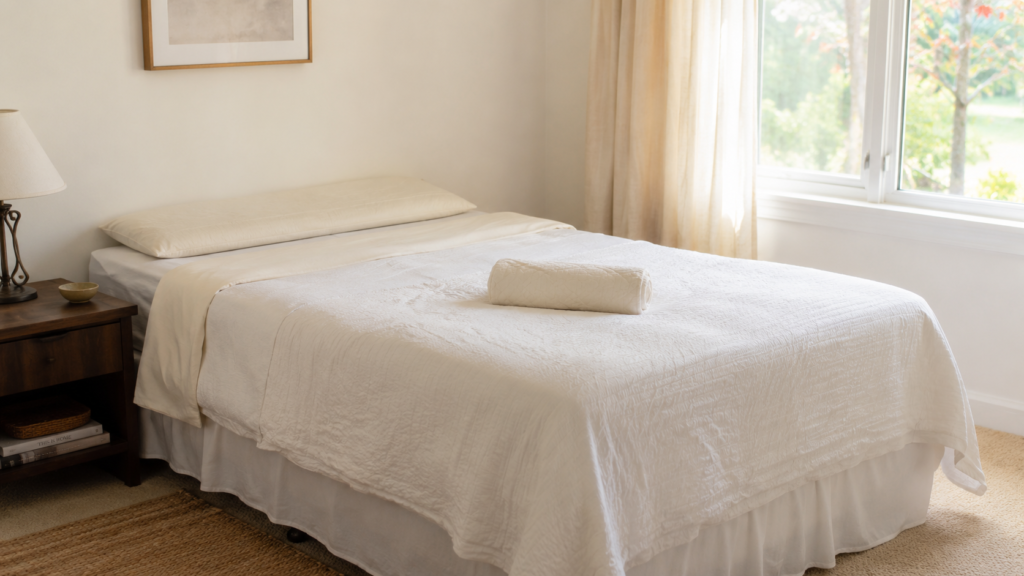
Trying to become a back sleeper is one of those changes that sounds simple in theory and turns out to be genuinely difficult in practice. People try it for a few nights, wake up in their old side or stomach position anyway, and conclude they’re just “not built” for back sleeping. The truth is less about body type and more about the fact that most attempts skip the structural support changes that make back sleeping comfortable in the first place — and without those changes, the body has every reason to abandon the position the moment conscious control during sleep onset disappears.
Back sleeping has genuine advantages worth pursuing. It distributes body weight evenly, supports spinal alignment when done correctly, avoids the facial skin compression that comes with side sleeping, and removes the neck rotation strain that stomach sleeping forces. For people without sleep apnea risk, it’s frequently the position physical therapists and orthopedic specialists recommend specifically because it’s the easiest position to support correctly with the right setup.
The reason most transition attempts fail isn’t lack of willpower — it’s that sleep position is controlled unconsciously once sleep onset occurs, and without the right physical setup actively supporting the back position, the body simply rolls into whatever position feels structurally more comfortable given the actual support available. Fixing that support is the entire game.
Why Your Body Keeps Reverting to a Different Position
Sleep position during the conscious falling-asleep phase is something you can control directly. The moment you transition into actual sleep, particularly into deep sleep and REM sleep where muscle relaxation deepens significantly, position control becomes governed by unconscious comfort signals rather than intention. If lying on your back without proper lumbar support causes the lower back to flatten uncomfortably against the mattress, or if the neck isn’t properly aligned by appropriate pillow height, the body registers ongoing low-grade discomfort throughout the night and shifts position to relieve it — usually without you ever becoming consciously aware it happened.
This is the core reason most back sleeping attempts fail within the first week. People change their starting position but don’t change the support structure underneath them, so the body experiences the same discomfort it would in any unsupported position and self-corrects during sleep, just as it would correct out of any uncomfortable position regardless of which one you started in. The starting position was never really the variable that mattered — the support underneath it was.
Muscle memory also plays a real role here, particularly for long-term side or stomach sleepers. Years of habitual positioning create learned patterns in how the body settles into sleep, and these patterns don’t disappear simply because you’ve decided to change them. This isn’t a permanent barrier, but it does mean that successful transitions typically take two to four weeks of consistent practice with proper support before the new position starts to feel like the default rather than something requiring active maintenance.
What surprised me researching this transition process was how much the perceived difficulty of becoming a back sleeper correlates with how poorly supported the attempt was structurally rather than any inherent incompatibility with the position. People who add proper lumbar and knee support from the start report success rates dramatically higher than people who simply try lying on their back on their existing bedding setup, which was likely optimized for their previous position rather than this new one.
Building the Pillow Setup That Actually Supports Back Sleeping
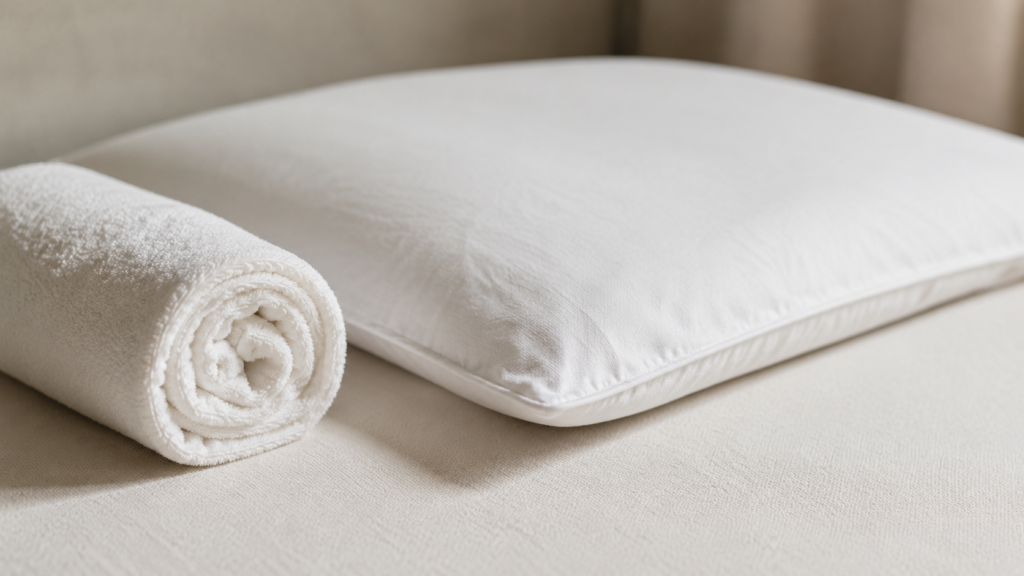
The single most important element of comfortable back sleeping is supporting the lumbar spine’s natural curve rather than letting it flatten against the mattress. This is also the core principle behind managing lower back pain more broadly — lying flat on a mattress without support underneath the knees pulls that curve flat, straining the lower back muscles and the discs between vertebrae over a full night of sustained unsupported extension.
A pillow placed under the knees — even a relatively thin one — relieves this strain by allowing the hips to tilt slightly and the natural lumbar curve to remain intact rather than being forced flat.
Neck and head support matters just as much but requires a different consideration than side sleeping pillows. A pillow that’s too thick tilts the head forward, creating chin-to-chest compression that strains the cervical spine. A pillow that’s too thin lets the head tilt backward, similarly straining the neck in the opposite direction. The correct pillow for back sleeping is generally thinner than what side sleepers need, just enough to fill the natural gap between the back of the head and the mattress without elevating the head significantly above a neutral, spine-aligned position. Some people benefit from a small additional rolled towel or thin pillow specifically under the neck’s curve, separate from the head pillow, to support that specific curvature without over-elevating the head itself.
For people transitioning from side sleeping, the shoulders often feel exposed and unsupported in a back position because they’re used to bearing weight differently. A slightly wider pillow that extends partially under the shoulders, rather than just under the head, can ease this adjustment period by providing a more gradual transition from the shoulder blades to the head rather than an abrupt height change at the neck. This is a comfort consideration during the adjustment period more than a permanent structural requirement, but it meaningfully reduces the early discomfort that causes people to abandon the attempt in the first few nights.
Mattress Firmness and Why It Changes Everything for Back Sleepers
Mattress firmness needs differ significantly between back sleeping and side sleeping, and using a mattress optimized for one while attempting the other position is one of the most common reasons transition attempts fail entirely. Side sleepers generally need a softer surface that allows the hips and shoulders to sink slightly, relieving pressure at those specific contact points. Back sleepers need a firmer surface that supports the body’s weight more evenly across the larger contact area of the back without allowing the hips to sink excessively, which would pull the spine out of alignment in the opposite direction from the lumbar flattening problem.
A mattress that’s too soft for back sleeping allows the hips — typically the heaviest part of the body in this position — to sink deeper than the shoulders and head, creating a banana-shaped spinal curve that strains the lower back over a full night, similar in effect to lying on an unsupported soft surface without any pillow correction. This is frequently why people who try back sleeping on a mattress that was purchased and broken in for side sleeping report persistent lower back discomfort regardless of how much pillow support they add — the mattress itself is working against the position fundamentally.
Memory foam mattresses present a particular consideration for back sleepers because they contour closely to body shape, which can be beneficial for even weight distribution but can also allow excessive sinkage in the hip area if the foam density is too soft for the sleeper’s body weight. A medium-firm to firm memory foam, or a hybrid mattress with additional support layers beneath the foam, tends to work better for sustained back sleeping than a very soft all-foam construction that prioritizes pressure relief over structural support.
What Most People Don’t Know: Using Physical Barriers to Train the Position
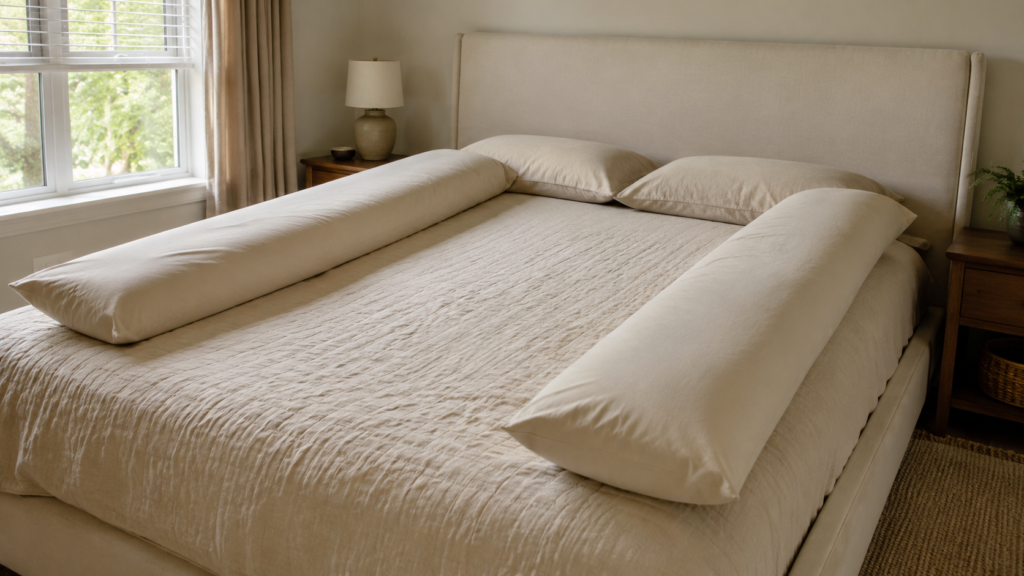
Here’s something rarely discussed in general sleep position advice: deliberately limiting your ability to roll out of the back position during the adjustment period is significantly more effective than relying on willpower or consciously trying to maintain the position, because position control during actual sleep isn’t something willpower can influence. Wedging a firm pillow or rolled towel along both sides of the torso creates a physical barrier that makes rolling onto the side or stomach uncomfortable enough to either wake you partially or discourage the roll before it fully completes, gradually training the unconscious positioning system to default toward back sleeping over the following weeks.
Specialized sleep position training devices — typically a small foam wedge or a wearable belt-style device worn around the torso — work through the same physical barrier principle in a more refined way, and these have accumulated reasonable evidence specifically for treating positional sleep apnea by preventing back sleeping, though the same underlying mechanism works equally well in reverse for someone trying to train themselves into back sleeping rather than out of it. The mechanism isn’t punishment-based discomfort designed to be miserable — it’s a temporary scaffold that prevents the easiest unconscious reversion while the new position becomes structurally comfortable enough to maintain on its own.
The duration this scaffolding is needed varies, but most people find that after two to four weeks of consistent use alongside proper pillow and mattress support, the back position starts to feel genuinely comfortable rather than something requiring active prevention of reversion. At that point, the physical barriers can typically be removed because the underlying discomfort that was driving the unconscious repositioning has been resolved by the better support setup, rather than the barrier itself being a permanent requirement.
When Back Sleeping Isn’t the Right Choice Despite the General Benefits
Back sleeping carries one significant risk that overrides its general benefits for a specific population: people with obstructive sleep apnea or a strong tendency toward snoring — often the same group who notice they drool more once flat on their back. Lying flat on the back allows gravity to pull the tongue and soft palate backward into the throat, narrowing the airway in a way that side sleeping largely avoids.
For someone with confirmed or suspected sleep apnea, deliberately training into a back sleeping position without addressing the airway risk first could meaningfully worsen breathing disruptions during sleep, even while genuinely improving spinal alignment and reducing facial pressure.
People with certain heart conditions are sometimes advised against back sleeping specifically because lying flat can increase the sensation of heartbeat awareness or, in some cases of more serious cardiac conditions, affect blood flow in ways that a cardiologist would need to assess individually rather than applying general population advice. Late pregnancy is another clear exception — lying flat on the back compresses the inferior vena cava under the weight of the uterus in the third trimester, making side sleeping the safer recommendation regardless of how appealing back sleeping’s other benefits might be during that specific period.
If you’re considering transitioning to back sleeping and have any history of snoring, witnessed breathing pauses during sleep, morning headaches, or excessive daytime fatigue, taking our Sleep Apnea Risk Test first is worth doing before pursuing this transition — confirming whether sleep apnea risk is present should come before training into a position that could meaningfully worsen an underlying breathing issue you may not yet be aware of.
Frequently Asked Questions
A: Most people need two to four weeks of consistent practice with proper pillow and mattress support before back sleeping starts to feel like a comfortable default rather than something requiring active effort to maintain. Using a physical barrier during this adjustment period significantly improves success rates compared to relying on willpower alone.
A: A thinner pillow than what side sleepers typically use works best, providing just enough height to fill the gap between the head and mattress without tilting the head forward or backward. A pillow under the knees to maintain the lumbar curve is equally important and often overlooked in back sleeping setups.
A: This happens most commonly because the support underneath you — pillow height, lumbar support, mattress firmness — isn’t adequately suited to the position, causing low-grade unconscious discomfort that prompts a position shift during sleep. Adjusting the support setup, rather than relying on willpower, resolves this in most cases.
A: Yes, for people with obstructive sleep apnea or significant snoring tendencies. Back sleeping allows gravity to pull the tongue and soft palate backward, narrowing the airway and worsening breathing disruptions. People with confirmed or suspected sleep apnea should be evaluated before deliberately training into a back sleeping position.
A: Medium-firm to firm mattresses generally work best for back sleeping, providing even support across the back’s contact area without allowing the hips to sink excessively, which would pull the spine out of alignment. A mattress optimized for side sleeping is often too soft to properly support a back sleeping position.
Support the Position, Don’t Just Attempt It

Becoming a back sleeper isn’t about forcing yourself to stay in a position your body keeps abandoning — it’s about removing the reasons your body has for abandoning it in the first place. Get the lumbar and knee support right, match your pillow height to a neutral neck position, confirm your mattress firmness actually suits the position, and use a physical barrier during the adjustment period rather than relying on willpower alone. Do that consistently for a few weeks, and the position that felt impossible in the first attempt becomes the one your body settles into without effort.