

Waking up without an alarm to find you’re naturally alert, rested, and within minutes of when you needed to wake up — it sounds like something that only happens by accident on days you didn’t need it. But natural waking isn’t random. It’s a physiological process driven by the same circadian mechanisms that govern every other aspect of your sleep-wake cycle, and understanding how it works makes it considerably more reproducible than most people assume. The people who consistently wake naturally at roughly the right time aren’t unusually gifted sleepers — they have a sleep schedule consistent enough that their biology has calibrated to it.
The reason most people rely entirely on alarms is straightforward: their sleep schedule shifts enough from night to night, or their total sleep duration is insufficient enough, that the body’s natural waking mechanisms never get the stable platform they need to function reliably. An alarm fills that gap, but it does so by overriding the body’s preferred waking point rather than aligning with it — which is why alarm-driven waking so often feels jarring, produces significant sleep inertia, and leaves people feeling more tired than the clock says they should be.
I’ve spent time tracking both my own natural waking patterns and the research behind why they happen because the difference between being dragged awake by an alarm mid-deep-sleep and waking naturally during a light sleep transition is one of the most noticeable quality-of-life differences that comes from actually optimizing sleep rather than just managing it. The mechanisms that produce natural waking are accessible to most people — they just require the conditions that allow them to operate.
The Biology Behind Natural Waking
Natural waking is driven primarily by two intersecting mechanisms — the circadian rhythm preparing the body for the transition to wakefulness in advance of the expected wake time, and the homeostatic sleep drive declining to a level where consciousness can re-emerge without external prompting. The circadian system begins preparing for waking roughly one to two hours before the expected wake time, initiating a cascade of physiological changes that together create the conditions for clean, alert emergence from sleep rather than the abrupt interruption an alarm produces.
The cortisol awakening response is the most significant of these preparatory changes — a sharp, rapid rise in cortisol beginning approximately 30 minutes before the anticipated wake time and peaking within the first 15 to 30 minutes after waking. Cortisol is the body’s primary alerting hormone, and this anticipatory surge doesn’t happen randomly or purely in response to waking — it’s timed by the circadian clock based on the expected wake time, meaning it begins its rise before you actually wake. This anticipatory cortisol spike is one of the clearest demonstrations that the body is actively preparing for waking rather than passively waiting to be roused, and it produces the physiological conditions — elevated alertness, rising core body temperature, increased heart rate — that support clear wakefulness rather than the disoriented grogginess of alarm-forced waking from deep sleep.
Core body temperature also begins rising from its overnight low in the hours before natural waking, complementing the cortisol response as part of the circadian preparation sequence. Melatonin production drops sharply in the early morning hours as the internal clock shifts from its biological night phase toward its biological day phase, removing the sleepiness signal that dominated overnight. Together, these changes mean that natural waking into light sleep near the end of a completed sleep cycle isn’t just a passive event — it’s the culmination of an hour or more of active physiological preparation that makes the transition to wakefulness feel far smoother than alarm interruption does.
Why Consistency Is the Foundation of Natural Waking
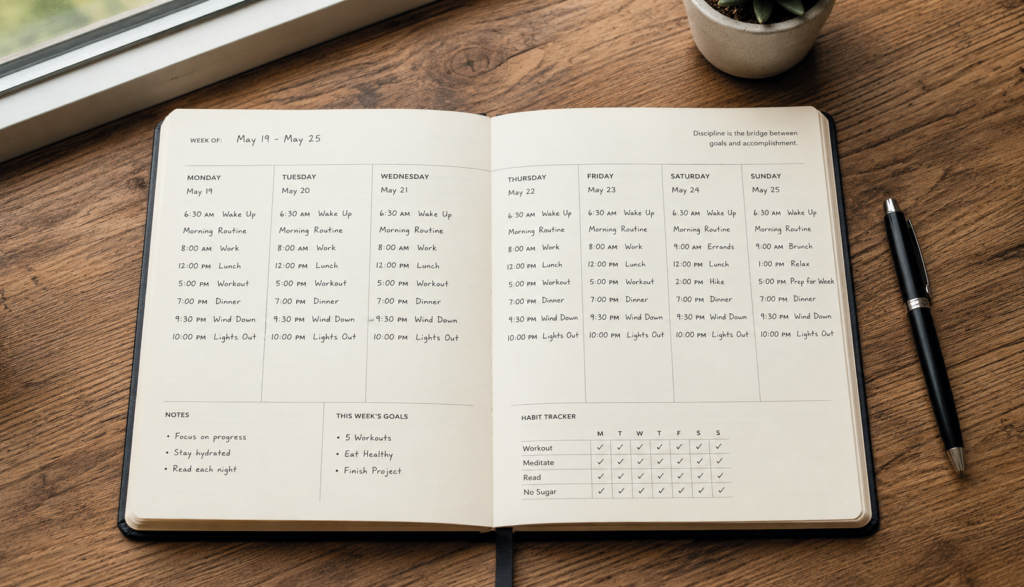
The cortisol awakening response and the other circadian preparation mechanisms only work reliably when the circadian clock knows what time to prepare for. A sleep schedule that shifts by more than an hour between weekdays and weekends, or an irregular bedtime that varies by two or three hours depending on the evening’s activities, prevents the clock from establishing a stable expected wake time — one more reason couples experimenting with the Scandinavian sleep method often report steadier mornings once partner-driven disruption is removed.
Without that stable expectation, the preparatory cortisol surge can’t be reliably timed, the body temperature rise happens at an uncertain point in the sleep cycle, and natural waking becomes unpredictable — sometimes occurring too early, sometimes too late, and rarely at the exact point in the sleep cycle that produces clean, alert waking.
This is the core reason that natural waking is so reliable for some people and so elusive for others — it’s almost entirely a function of schedule consistency rather than some innate ability. People with extremely consistent sleep schedules, maintained across weekdays and weekends without significant variation, have given their circadian rhythm the predictable environment it needs to calibrate its preparation sequence accurately. Their body knows when to expect waking because that time has been consistent enough to register as a stable pattern rather than a random variable.
I’ve tracked this myself across periods of different schedule consistency, and the relationship is direct and fairly fast-responding. After about a week of a consistent wake time, the natural waking mechanism begins landing reliably within 15 to 20 minutes of that target. After two to three weeks, the accuracy tightens further, and the preparatory cortisol surge becomes noticeably more reliable in how awake I feel at the target time compared to earlier in the adjustment period. The mechanism doesn’t require weeks of perfect schedule adherence to start working — it starts calibrating fairly quickly once consistency is established.
Sleep Cycle Timing and the Light Sleep Window
Natural waking most commonly occurs during the light sleep phases that appear at the natural transition points between sleep cycles — the brief periods of stage 1 or stage 2 NREM sleep that separate one full cycle from the next before the body either begins a new cycle or transitions fully to wakefulness. These transition points represent the moments of lowest sleep depth across the night, when the arousal threshold is at its lowest and the brain is closest to the waking state without having actually crossed back into it. The circadian preparation mechanisms described above are timed to coincide with one of these natural transition points near the anticipated wake time, making natural waking feel smooth specifically because it’s emerging from the lightest possible sleep state rather than being interrupted mid-cycle.
This is the mechanistic basis for sleep cycle-based timing advice, and the same principle behind identifying the best time to wake up — planning sleep duration in multiples of approximately 90 minutes improves waking experience.
Using our Chronotype Calculator to identify a bedtime that aligns your anticipated wake time with a natural cycle transition, accounting for your typical sleep onset latency, improves the probability that when the circadian preparation sequence triggers, it coincides with a light sleep window rather than mid-deep-sleep or mid-REM.
This alignment doesn’t guarantee natural waking but significantly increases the probability that waking at the target time — whether natural or alarm-assisted — occurs at a point in the cycle where waking feels relatively clear rather than disoriented.
REM sleep concentrating in the later cycles of the night means that for most people sleeping a full recommended duration, the final hour or two before natural waking is primarily REM sleep and light sleep — stages where the arousal threshold is low enough that the circadian awakening signals can effectively surface consciousness. This is part of why people frequently wake naturally from vivid dreams in the morning — they’re waking from the extended REM periods of the later sleep cycles at a moment when the circadian preparation sequence has raised alertness close to the waking threshold.
What Most People Don’t Know: Anticipatory Waking Is a Real Phenomenon
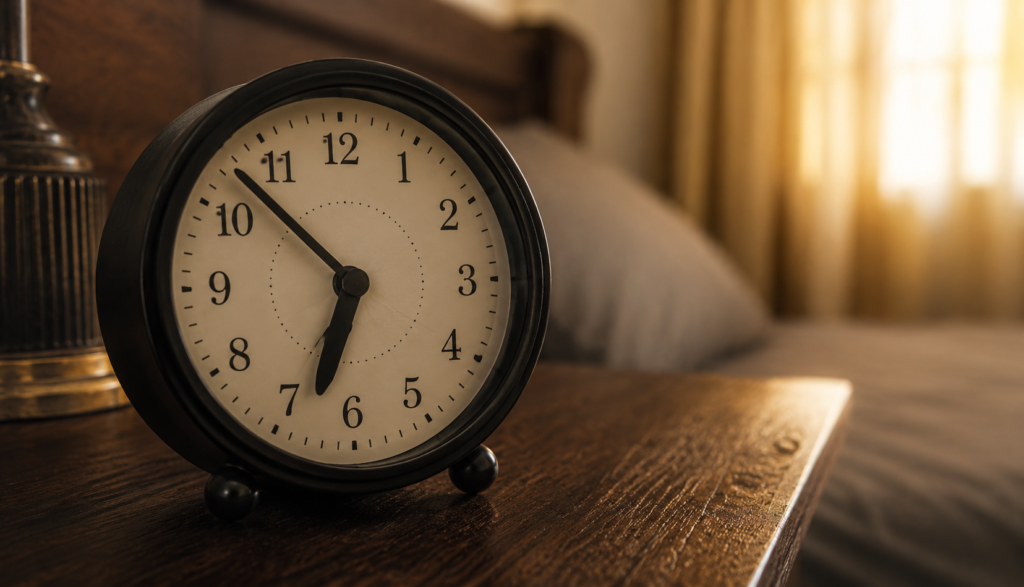
Here’s something that surprises most people when they first encounter it in the sleep research: anticipatory waking — waking just before an alarm goes off — is a scientifically documented phenomenon driven by the cortisol awakening response being timed to a specific anticipated wake time rather than the alarm itself. When people use an alarm consistently at the same time for long enough that their circadian clock has registered it as the expected wake time, the preparatory cortisol surge begins timing itself to that clock time — causing natural waking a few minutes before the alarm, which is then experienced as the body “knowing” the alarm is coming.
The mechanism underlying this isn’t psychic — it’s simply the cortisol awakening response successfully calibrating to a consistent expected wake time and producing the physiological alerting sequence that tips consciousness back to the waking threshold slightly before the external trigger arrives. People who regularly experience this phenomenon aren’t doing anything special. They’ve maintained their alarm time consistently enough for their circadian system to treat it as a stable anchor, producing the same preparation sequence that drives natural waking in people without alarms. The alarm has, through consistency, trained the biology to make itself redundant — which is precisely the condition that makes transitioning away from alarm dependence most feasible.
From experience researching this pattern, it’s one of the more elegant demonstrations that the circadian system is actively predicting and preparing rather than simply reacting, and it explains why the transition from alarm-dependent waking to natural waking is most achievable for people whose schedule is already consistent enough that the anticipatory waking phenomenon has begun appearing. That intermittent natural pre-alarm waking is the biological system signaling that it’s ready to operate independently — it just needs the consistent schedule that’s already enabling it to be maintained without the alarm providing the artificial anchor.
Building the Conditions for Reliable Natural Waking
Establishing a fixed wake time and holding it consistently across all seven days — within roughly 30 minutes of variation — is the highest-leverage single change for making natural waking reliable. The wake time is the primary anchor the circadian clock uses to time its preparation sequence, more influential than bedtime in terms of what anchors the clock’s calibration. This means protecting the wake time even on weekends and days off matters more than protecting the bedtime for the specific purpose of developing reliable natural waking.
Morning light exposure immediately upon waking — ideally natural sunlight outdoors, or a bright artificial light source — reinforces the circadian signal that the day has begun at that clock time, strengthening the calibration of the preparation sequence for subsequent mornings. This isn’t just a habit recommendation without mechanism — light hitting the retina suppresses melatonin directly and signals the suprachiasmatic nucleus, the brain’s master circadian clock, with precise timing information that calibrates the next morning’s preparation sequence. Consistent morning light exposure at a fixed time produces more reliable natural waking than a fixed wake time without light exposure, because it provides the clock with a stronger signal about exactly when the biological morning is occurring.
Ensuring adequate total sleep duration is a prerequisite that often gets overlooked in the focus on timing — a person who is chronically sleep deprived won’t wake naturally at the right time consistently because their homeostatic sleep drive is still elevated enough to suppress waking even when the circadian preparation sequence has begun. Natural waking requires that both systems — the circadian clock’s preparation sequence and the declining homeostatic sleep pressure — align at the target wake time. Insufficient sleep leaves the homeostatic drive too elevated for the circadian signal to effectively surface wakefulness, which is why increasing sleep deprivation and improving schedule consistency simultaneously tends to produce better outcomes than addressing either variable alone. If consistent natural waking remains elusive despite schedule consistency and adequate sleep, a doctor or sleep specialist is always worth consulting to rule out underlying sleep disorders that may be preventing the consolidation of sleep needed for the natural waking mechanism to function reliably.
FAQ: How to Wake Up Without an Alarm

A: Yes, for most people with sufficient sleep duration and a consistent enough schedule. The circadian rhythm’s cortisol awakening response calibrates to a stable expected wake time, producing the physiological preparation for waking that makes natural emergence from sleep reliable — but this requires a consistent schedule maintained across all seven days for the calibration to work accurately.
A: This is anticipatory waking — the cortisol awakening response timing itself to the expected alarm time after sufficient exposure to a consistent wake schedule. The circadian system treats the consistent alarm time as the expected wake time and begins its alerting preparation sequence accordingly, producing natural waking just before the external trigger arrives.
A: Most people begin experiencing more reliable natural waking after one to two weeks of a consistent wake time, with accuracy improving further over the following weeks. The mechanism responds relatively quickly once consistent schedule conditions are established, though individual variation in circadian calibration speed exists.
A: Waking from deep sleep mid-cycle via alarm produces significant sleep inertia and disrupts the natural waking process. For people who consistently feel jarred and groggy from alarms, this signals either insufficient sleep duration leaving them in deeper sleep at the wake time, or poor cycle timing placing the alarm mid-cycle rather than at a natural transition point.
A: Yes — planning sleep duration so the target wake time falls near a natural cycle transition point increases the probability of waking during light sleep rather than mid-deep sleep or mid-REM. Using a sleep calculator to identify cycle-aligned bedtimes improves waking clarity whether waking naturally or via alarm.
A: Morning light exposure suppresses melatonin and signals the suprachiasmatic nucleus — the brain’s master circadian clock — with precise timing information that calibrates the next morning’s cortisol awakening response. Consistent morning light at a fixed time strengthens circadian calibration more effectively than schedule consistency alone.
Give the Biology the Conditions It Needs
Waking naturally isn’t a talent — it’s what the body does when it has enough sleep, a consistent enough schedule for the circadian system to calibrate its preparation sequence, and a sleep window that allows the homeostatic drive to decline sufficiently by the target wake time. Fix those three variables and the mechanism handles the rest. The alarm becomes a backup rather than the primary driver, and the mornings that used to feel like an assault start feeling like a conclusion instead.