
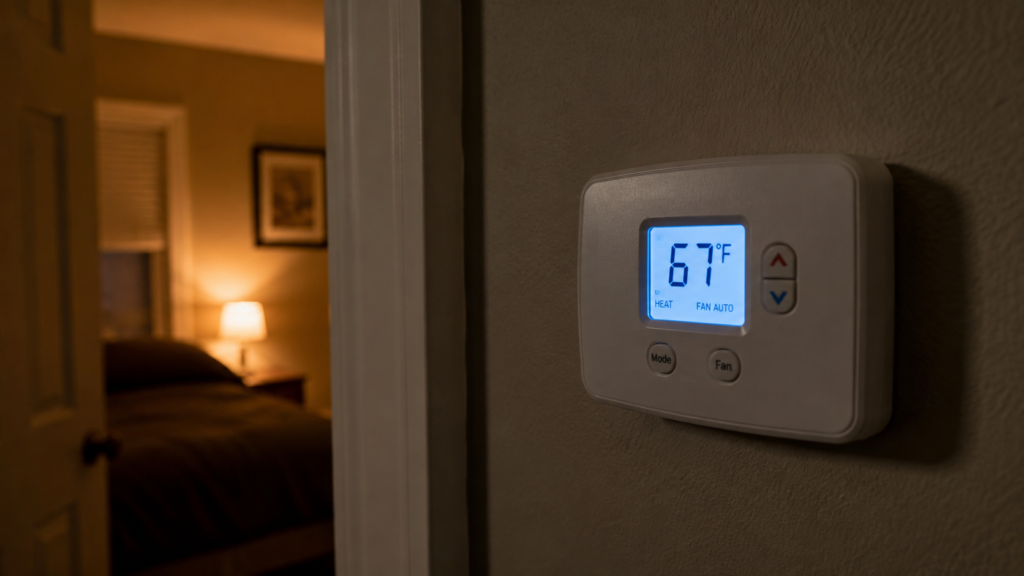
Temperature is one of the most underrated levers in sleep quality, and it’s also one of the easiest to get wrong without realizing it. People troubleshoot poor sleep with new mattresses, supplements, and elaborate evening routines while the room itself is working against them the entire time. The research on sleep temperature is remarkably consistent — there’s a specific range where deep sleep is most achievable, and stepping outside that range in either direction measurably degrades sleep quality regardless of how good everything else about the sleep setup is.
The widely cited target — between 65 and 68 degrees Fahrenheit, or roughly 18 to 20 degrees Celsius — isn’t an arbitrary number pulled from wellness culture. It’s derived from how the body’s thermoregulation system interacts with the sleep onset process and the deeper sleep stages. Understanding that mechanism is what makes the temperature advice actually useful rather than just another item on a sleep hygiene checklist that gets followed without knowing why it matters.
I’ve looked closely at the thermoregulation research because temperature is one of the few environmental sleep factors with genuinely strong, mechanistic evidence behind it, compared to some other commonly repeated sleep advice that’s weaker than its popularity suggests. The body’s relationship with temperature during sleep is precise enough that getting it right produces measurable, fairly immediate improvements for most people.
Why Core Body Temperature Drives Sleep Onset
The body’s core temperature follows a predictable daily rhythm tied to the circadian rhythm, peaking in the late afternoon or early evening and beginning a gradual decline in the hours leading up to natural sleep time. This temperature drop isn’t incidental — it’s a primary signal that helps trigger sleep onset, working alongside melatonin production to prepare the body for the transition into sleep. A bedroom that’s too warm interferes directly with this process by preventing the body from completing the temperature drop it needs, which is why a hot room makes falling asleep measurably harder even when someone feels tired enough to sleep.
The mechanism behind this temperature drop involves vasodilation — the widening of blood vessels, particularly in the hands and feet, which allows heat to radiate away from the body’s core more efficiently. This is why hands and feet often feel warm just before sleep onset, even as the overall body is cooling — the extremities are actively releasing heat to bring the core temperature down. A warm bedroom environment counteracts this heat radiation process by reducing the temperature differential between the body and its surroundings, making it physically harder for the core to drop to the temperature sleep onset requires.
What surprised me learning about this mechanism in detail was how directly the room temperature interacts with a process that feels purely internal. It’s easy to assume that falling asleep is something the brain handles independently of the environment, but the thermoregulation system is deeply environment-dependent, meaning the same person with the same level of tiredness can have a dramatically different sleep onset experience purely based on whether the room is supporting or working against their body’s natural cooling process.
Once sleep begins, the temperature relationship becomes even more important for slow wave sleep specifically. Deep NREM sleep — the most physically restorative stage of the night — requires the lowest core body temperature of the entire sleep cycle. A room that’s too warm doesn’t just delay sleep onset; it actively shortens or shallows the deep sleep stages throughout the night, because the body can’t sustain the temperature drop needed to stay in slow wave sleep if the surrounding environment keeps working against it.
What Happens When the Room Is Too Warm or Too Cold
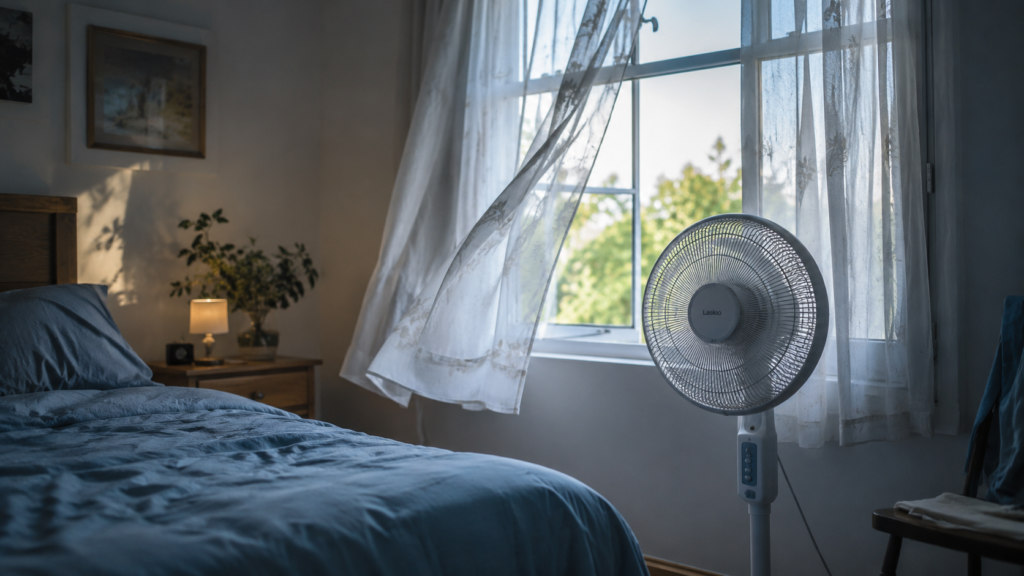
A bedroom above roughly 71 to 75 degrees Fahrenheit consistently produces measurable reductions in sleep quality across research on this topic, with effects showing up specifically in reduced deep sleep and REM sleep duration, increased night waking, and longer sleep onset latency — the time it takes to actually fall asleep. People in overly warm rooms frequently report waking multiple times through the night even when they don’t fully recall doing so, because the body is repeatedly being pulled into lighter sleep stages as it struggles to maintain the temperature drop required for deeper sleep. The fragmentation accumulates across the night even though each individual waking might be brief enough to go unremembered.
The relationship between excessive heat and REM sleep specifically is notable because REM sleep involves a partial loss of the body’s normal thermoregulatory response — during REM, the brain’s temperature regulation centers become less active, meaning the body is less able to compensate for an overly warm environment during this sleep stage than during other stages. This makes REM sleep particularly vulnerable to disruption from heat, and since REM sleep concentrates in the later portion of the night, an overly warm bedroom can specifically degrade the quality of early morning sleep even if the earlier hours felt fine.
A bedroom that’s too cold creates a different but equally real problem. While mild cold can be tolerated reasonably well by an otherwise rested body, temperatures significantly below the comfortable range force the body into active heat-generating responses — including subtle muscle tension and shivering in more extreme cases — that activate the sympathetic nervous system in ways that work against the relaxation sleep onset requires. Cold also tends to disrupt sleep through more conscious discomfort that prompts repeated waking to adjust bedding, which interrupts sleep continuity directly rather than through the subtler architectural disruption that excessive heat produces.
Most people overlook this completely: the relationship between temperature and sleep isn’t symmetrical. Being slightly too cold is generally easier for the body to compensate for through bedding and clothing adjustments than being slightly too warm, because adding insulation is simpler and more effective than the limited cooling options available once a room is genuinely too hot. This is part of why sleep experts consistently lean toward recommending a cooler rather than warmer baseline temperature — it’s easier to correct for being slightly under the ideal range than over it.
How Temperature Needs Change Across Different Life Stages and Conditions
Menopause introduces a significant temperature-related sleep disruption that operates somewhat independently of ambient room temperature, through hot flashes and night sweats driven by declining estrogen levels affecting the body’s internal temperature regulation centers. Women experiencing this transition often need a meaningfully cooler bedroom than the general recommendation to offset these internally generated temperature spikes, sometimes finding relief specifically from temperatures at the lower end of or even slightly below the typical 65 to 68 degree range, alongside moisture-wicking bedding that helps manage the sweating that accompanies these episodes.
Infant temperature needs differ substantially from adult recommendations because infants have less developed thermoregulation capacity and a higher risk profile associated with overheating, which has documented links to increased risk in sleep-related infant death research. Pediatric sleep guidance generally recommends a slightly warmer range than the adult ideal, typically between 68 and 72 degrees Fahrenheit, combined with appropriate light sleepwear rather than heavy blankets, reflecting both their different thermoregulatory capacity and the specific safety considerations involved in infant sleep environments.
Seasonal changes affect how achievable the ideal temperature range is without active climate control, and people without reliable air conditioning during hot months often see sleep quality decline measurably during summer compared to other seasons, independent of any other change in their sleep habits. This seasonal pattern in sleep complaints is well-documented and underscores how significant a factor ambient temperature actually is — when the only variable that changes is outdoor and indoor temperature, the corresponding shift in reported sleep quality demonstrates the strength of this relationship more clearly than almost any controlled study could.
What Most People Don’t Know: Temperature Affects Sleep Apnea Severity Too
Here’s a connection that rarely gets discussed alongside general sleep temperature advice: ambient temperature can measurably influence sleep apnea severity, with research suggesting that warmer sleeping environments are associated with increased frequency and duration of apnea events in people who already have obstructive sleep apnea. The proposed mechanism involves how temperature affects upper airway muscle tone and nasal congestion — warmer, often more humid air can contribute to nasal passage swelling and altered muscle relaxation patterns in the throat that compound the mechanical airway collapse already occurring in sleep apnea.
This means that for people managing sleep apnea through CPAP, oral appliances, or positional therapy, bedroom temperature isn’t a separate, unrelated consideration — it’s a contributing factor that can make an existing treatment more or less effective depending on whether the room temperature is supporting or working against the airway’s baseline function.
A person doing everything right with their primary sleep apnea treatment but sleeping in an overly warm room may still experience worse outcomes than the same treatment applied in a properly cooled environment, simply because the temperature is adding an additional layer of airway compromise on top of the structural issue being treated.
From experience researching this overlap, it’s a connection that deserves more attention in sleep apnea management discussions than it typically receives, because temperature is one of the most controllable variables available compared to the anatomical and structural factors that drive the underlying condition. Optimizing bedroom temperature alongside primary apnea treatment is a low-cost, low-effort addition that has genuine mechanistic support for improving outcomes rather than just generally supporting comfort.
Practical Ways to Reach and Maintain the Ideal Sleep Temperature
For people without central air conditioning or in climates where maintaining 65 to 68 degrees consistently is difficult, a combination of strategies tends to work better than relying on any single approach. A fan positioned to create airflow across the body, even without actively cooling the room’s overall temperature, supports the body’s own heat dissipation through evaporative cooling at the skin’s surface and can meaningfully improve sleep comfort even in a room that’s technically warmer than the ideal range. This works through a similar principle to the vasodilation-based heat radiation the body uses naturally — moving air simply accelerates that heat transfer process.
Breathable bedding materials — natural fibers like cotton, linen, or specifically designed moisture-wicking synthetic blends — make a meaningful difference by allowing heat and moisture to escape rather than trapping them against the body throughout the night, a principle that also underlies the Scandinavian sleep method of separate duvets for couples.
This matters particularly for people who run warm naturally or who are managing night sweats from any cause, since the bedding’s ability to manage heat and moisture directly affects how much the local sleep environment deviates from the room’s overall measured temperature, which can differ significantly from the ambient air temperature once trapped under heavy or non-breathable bedding.
Timing showers strategically can also support the body’s natural cooling process. A warm shower 60 to 90 minutes before bed temporarily raises surface skin temperature, which then triggers an accelerated compensatory cooling response afterward as the body works to return to baseline — meaning the post-shower cooling effect can actually help the core temperature drop needed for sleep onset arrive faster than it would otherwise, despite the shower itself being warm. Using our Sleep Quality Calculator to identify your ideal bedtime and then aligning your room temperature adjustment and pre-sleep routine to support that specific window helps ensure the temperature conditions are properly in place exactly when your body is preparing to initiate sleep, rather than being addressed inconsistently or too late in the evening to have meaningful effect.
If you’re dealing with chronic sleep issues that persist despite optimizing bedroom temperature and other environmental factors, a doctor or sleep specialist is always worth consulting — temperature optimization is a genuinely powerful lever, but it works best as part of a complete approach rather than a standalone fix for sleep problems that may have other underlying contributing causes.
FAQ
A: Most sleep research points to a range between 65 and 68 degrees Fahrenheit, or roughly 18 to 20 degrees Celsius, as the ideal bedroom temperature for adults. This range supports the natural core body temperature drop required for sleep onset and helps sustain deep sleep stages throughout the night.
A: A cool room supports the natural drop in core body temperature that triggers and sustains sleep, working alongside melatonin production as part of the body’s sleep onset signal. A warm room prevents this temperature drop, delaying sleep onset and reducing the depth and duration of slow wave sleep and REM sleep.
A: Mild cold is generally well tolerated and easier to correct than excessive heat, since adding bedding or clothing layers compensates effectively. However, temperatures significantly below comfortable levels can trigger heat-generating physiological responses that activate the sympathetic nervous system and disrupt the relaxation needed for sleep onset.
A: Yes — REM sleep involves reduced thermoregulatory function in the brain, meaning the body is less able to compensate for an overly warm room during this stage. Since REM sleep concentrates in the later part of the night, excessive heat can specifically degrade the quality of early morning sleep more than other stages.
A: Pediatric guidance generally recommends a slightly warmer range than the adult ideal, typically between 68 and 72 degrees Fahrenheit, paired with light sleepwear rather than heavy blankets. This reflects an infant’s less developed thermoregulation and documented safety concerns associated with overheating during infant sleep.
A: Yes — warmer sleeping environments are associated with increased apnea event frequency and duration in people with obstructive sleep apnea, likely through effects on nasal congestion and upper airway muscle tone. Optimizing bedroom temperature can support primary apnea treatments like CPAP or oral appliances in producing better outcomes.
A: A fan positioned for airflow across the body supports evaporative cooling even without lowering ambient room temperature. Breathable bedding materials like cotton or moisture-wicking blends prevent heat from being trapped against the body. Taking a warm shower 60 to 90 minutes before bed can also accelerate the body’s natural post-shower cooling response.
Temperature Is a Higher-Leverage Fix Than Most People Realize
Bedroom temperature is one of the most consistently supported, mechanistically clear levers available for improving sleep quality, and it’s often overlooked in favor of more complicated interventions. Getting the room into the 65 to 68 degree range supports the core body temperature drop that drives both sleep onset and deep sleep maintenance throughout the night. If sleep quality has been an ongoing struggle and temperature hasn’t been deliberately addressed, it’s one of the simplest changes available with genuine evidence behind it — worth testing before adding complexity anywhere else in the sleep routine.